
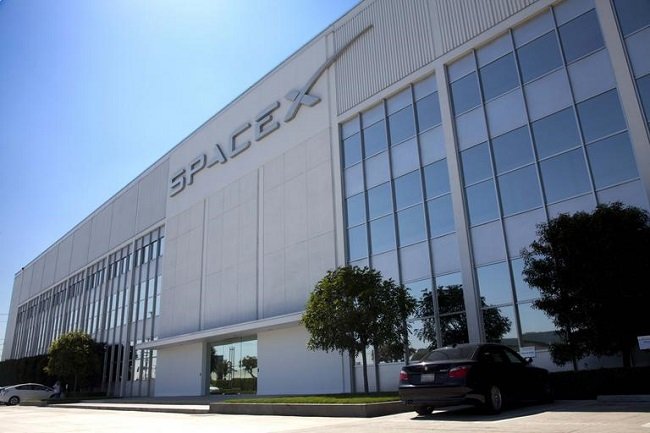
Across global financial markets, a powerful sense of anticipation is being felt. Investors, analysts, and governments are all watching the same question closely is a massive new wave of initial public offerings about to be released? At the center of this speculation, two companies are being mentioned again and again SpaceX and OpenAI.
Together, these companies are believed to represent a potential IPO value that could approach $3 trillion if they eventually go public, either alone or as part of a broader market surge. This possibility has been described by market commentators as an “IPO geyser,” meaning a sudden and powerful release of long-held private value into public markets. The idea has been widely discussed in financial media as IPO activity begins to recover after several slow years.
For years, many of the world’s most valuable technology companies have remained private far longer than in the past. That trend may now be approaching a turning point. As interest rates stabilize, artificial intelligence expands rapidly, and space technology becomes more commercially important, conditions are being created for one of the most significant IPO moments in modern financial history.
What an IPO Is and Why It Matters
An IPO, or initial public offering, is the process through which a private company sells shares to the public for the first time. Once an IPO is completed, the company becomes publicly traded on a stock exchange. This allows everyday investors, institutions, and retirement funds to buy ownership stakes.
IPOs matter because they unlock value. Early investors and founders are given a chance to turn long-term investments into liquid assets. At the same time, companies are provided with large amounts of capital that can be used for expansion, research, hiring, and global growth. A simple explanation of how IPOs work and why they matter can be found here:
In the broader economy, IPOs are often viewed as confidence signals. When IPO activity rises, optimism is usually being felt. When IPOs slow down, caution tends to dominate.
A $3 trillion IPO wave would not be normal. It would be historic.
Why SpaceX Is Central to IPO Speculation
SpaceX has long been viewed as one of the most valuable private companies in the world. Founded with the goal of reducing space travel costs and enabling future life beyond Earth, the company has grown into a dominant force in the global aerospace industry.
Today, SpaceX is not only launching rockets. It is operating satellite networks, supporting national security missions, and building a global internet service through Starlink. Starlink is already providing internet access in remote regions, changing how connectivity is delivered worldwide.
https://www.spacex.com/
https://www.starlink.com/
Because of this wide reach, SpaceX is often compared not just to aerospace firms, but also to telecommunications and infrastructure giants. Recent private funding rounds have placed its valuation above $150 billion, according to financial reports, with long-term estimates running much higher.
If SpaceX were taken public, it could instantly rank among the largest IPOs ever recorded. This possibility alone has driven intense investor attention.
Why OpenAI Is Seen as a Market-Changing IPO Candidate

OpenAI is widely viewed as one of the most influential artificial intelligence organizations in the world. In a short period, AI has moved from a specialized research field into a core business tool affecting education, healthcare, software, finance, and government planning.
OpenAI’s systems are being used by companies and individuals across the globe. As AI adoption accelerates, the economic importance of firms leading this field has grown rapidly. Analysts often compare the AI boom to the early days of the internet or mobile computing.
Unlike traditional technology companies, AI firms are valued largely on future potential. Productivity gains, automation, and new industries are expected to emerge over the next decade. Because of this, OpenAI is frequently listed among the most valuable private technology companies in history.
If OpenAI were to go public, the listing would likely attract global attention and massive demand.
Why the $3 Trillion Number Is Being Discussed
The $3 trillion figure does not come from a single IPO. Instead, it represents the combined potential value of several large private companies that may eventually enter public markets. SpaceX and OpenAI are leading this group.
Other companies in fintech, artificial intelligence, biotechnology, and climate technology are also being closely watched. Many delayed IPO plans during years of inflation, rising interest rates, and market instability. As conditions improve, those plans are being reconsidered.
When analysts add together the estimated valuations of these private firms, the total approaches $3 trillion. While this number is speculative, it highlights how much value is currently locked in private markets.
Why These Companies Stayed Private for So Long
In the past, companies often went public early. Today, large firms remain private much longer. This shift occurred because private funding became more available and regulation for public companies became more complex.
By staying private, companies were allowed to focus on long-term innovation without short-term market pressure. However, access to these companies was limited to wealthy investors and institutions.
https://www.weforum.org/agenda/2023/private-markets-growth/
An IPO would change that balance by opening participation to public investors.
Why Market Conditions Are Changing
For several years, IPO markets were slowed by uncertainty. High inflation, rising interest rates, and global instability reduced risk appetite. Recently, conditions have begun to improve.
Inflation has eased in many economies, interest rate increases have slowed, and stock markets have stabilized. At the same time, enthusiasm around artificial intelligence has driven strong performance in tech stocks.
Because of this, the environment is being viewed as more favorable for major IPOs.
How a Massive IPO Wave Could Affect Global Markets
If a $3 trillion IPO wave were to occur, global markets would be affected in multiple ways. Capital would be redirected toward new listings, changing investment patterns.
Major indices would be reshaped as large companies enter public benchmarks. Pension funds and index-tracking investments would automatically adjust.
https://www.msci.com/indexes
At the same time, investor confidence could rise, encouraging more startups and innovation worldwide.
What This Means for Everyday Investors
For everyday investors, a large IPO wave brings both opportunity and risk. Access would be provided to companies that were previously unavailable, but valuations may be high.
Historically, some large IPOs have delivered strong long-term returns, while others struggled after early excitement faded. Understanding fundamentals is essential.
https://www.sec.gov/oiea/investor-alerts-and-bulletins/investor-bulletin-investing-ipo
Long-term investors are often advised to focus on business strength rather than hype.
How Governments and Regulators Are Watching Closely
Governments are closely monitoring IPO speculation, especially in sectors like AI and space. These industries raise concerns related to national security, data protection, and competition.
Regulators may apply stricter disclosure requirements to ensure transparency and fairness. Listing locations also carry political and economic importance.
https://www.oecd.org/finance/financial-markets/
The Role of Artificial Intelligence in Driving Investor Excitement
Artificial intelligence is expected to reshape productivity and economic growth globally. AI-driven efficiency gains could transform how work is done across industries.
https://www.pwc.com/gx/en/issues/artificial-intelligence.html
Because of this potential, companies leading AI development are being valued at unprecedented levels.
Why Timing Will Be Everything
Despite speculation, no official IPO plans have been confirmed by SpaceX or OpenAI. Timing will depend on market stability, internal readiness, and strategic goals.
History shows that timing often determines IPO success or failure.
https://hbr.org/2016/why-some-ipos-succeed-and-others-fail
Could This Be a Turning Point for Public Markets?
A major IPO wave could reconnect private innovation with public markets. Transparency would increase, and public participation in technological growth would expand.
Such a shift could redefine how future companies approach growth and funding.
A Moment That Could Define the Next Decade
Speculation about a $3 trillion IPO wave led by SpaceX and OpenAI reflects a deeper shift in global markets. Space technology and artificial intelligence are shaping the future, and their leading companies may soon enter public view.
If these IPOs occur, they will not simply create headlines. They will reshape investment flows, innovation priorities, and economic influence for years to come.
The Real Reason America Is Lagging in the Electric Vehicles Revolution