
Inflation, the general rise in prices of goods and services over time, is a central force influencing economic decisions at every level from household budgets to national fiscal policy. For governments, especially the federal government of a country like the United States, inflation presents a critical challenge: it affects how funds are allocated, how policies are prioritized, and how effectively public services can be delivered. The federal budget is not just a document outlining expenses and revenues; it is a reflection of national priorities and a roadmap for managing the economy. Inflation, when it rises or falls significantly, disrupts this roadmap, forcing recalculations, adjustments, and sometimes even major policy shifts.
Understanding Federal Budget Allocations
Before diving into the effects of inflation, it’s important to understand what federal budget allocations are. Each year, governments plan their spending based on projected revenues and economic needs. Budget allocations refer to the distribution of government funds across various sectors and programs, including:
Defense and national security
Healthcare (e.g., Medicare and Medicaid)
Social security and welfare programs
Education
Infrastructure
Scientific research
Interest payments on national debt
These allocations are based on policy goals, political decisions, and economic forecasts including projections of inflation.
Direct Effects of Inflation on Federal Budget
Increased Cost of Government Services
Inflation leads to higher costs for the goods and services that the government purchases, from military equipment to office supplies and construction materials for infrastructure projects. This means that, without adjustments, the same budget buys less.
For example, if inflation rises by 5%, a highway project originally budgeted at $1 billion may now cost $1.05 billion or more, depending on wage increases and material costs. This forces the government to either:
Increase funding to maintain the same level of service.
Scale back the project.
Delay or cancel other planned expenditures.
Automatic Spending Increases in Entitlement Programs
Certain federal programs are indexed to inflation. Social Security, for example, includes a Cost-of-Living Adjustment (COLA) that automatically increases benefits to match inflation. Similarly, federal pensions and some veterans’ benefits rise with the Consumer Price Index (CPI). This built-in response helps beneficiaries maintain purchasing power but increases total government spending.
In high-inflation years, this leads to substantial increases in mandatory spending, potentially crowding out discretionary spending unless revenues rise proportionately.
Impact on Revenue Collection
Nominal Increases in Tax Revenue
Inflation can increase federal revenues in nominal terms because tax collections on income and sales tend to rise with prices and wages. However, this doesn’t always translate into real (inflation-adjusted) increases in purchasing power for the government.
Bracket Creep
If tax brackets aren’t properly indexed for inflation, taxpayers may be pushed into higher income brackets even if their real income hasn’t increased a phenomenon known as bracket creep. This can increase tax burdens unfairly and lead to calls for tax reform or adjustments in the tax code.
Debt Servicing and Inflation
One of the largest components of federal spending is interest payments on national debt. Inflation can influence this in complex ways:
Short-Term Relief
In the short term, inflation can reduce the real value of existing debt. If the government borrowed at fixed interest rates, it repays those loans in cheaper dollars. This may appear to benefit the government by eroding debt.
Long-Term Pressure
However, persistent inflation often leads to higher interest rates, as the central bank tightens monetary policy to control price increases. New debt issued by the government then carries higher interest costs, significantly increasing future debt servicing burdens.
Impact on Discretionary Spending
Discretionary spending includes funding for areas like education, transportation, scientific research, and international aid areas not automatically adjusted for inflation. When inflation eats into the federal budget, these areas often face the greatest pressure:
Budget caps may restrict increases in spending, even if real costs rise.
Political priorities may divert funds from one sector to another.
Public backlash may force cuts or changes, especially when inflation reduces the purchasing power of ordinary citizens.
This can lead to underfunding of essential programs and delayed progress on long-term goals like infrastructure modernization or climate resilience.
Budget Planning and Forecasting Challenges
Inflation introduces significant uncertainty into budget planning. Policymakers must estimate future inflation when preparing the budget, but if actual inflation deviates from projections, it can result in over- or under-spending.
For instance
If inflation is underestimated, real spending power is lost.
If overestimated, the government may allocate more funds than necessary, leading to inefficiencies.
Forecasting inflation is notoriously difficult due to unpredictable external factors such as global oil prices, supply chain disruptions, or geopolitical events.
Strategies to Manage Inflation’s Impact on Budgeting
Governments employ several strategies to mitigate the effects of inflation on budget allocations:
Indexation
Automatically adjusting certain benefits and tax brackets to inflation helps stabilize economic conditions and protect public trust.
Flexible Budgeting
Using contingency funds or mid-year budget reviews allows governments to adapt to inflation changes without derailing overall fiscal plans.
Monetary-Fiscal Coordination
Close collaboration between central banks and fiscal authorities helps align interest rate policies and government spending. For example, when inflation is high, the Federal Reserve may raise interest rates, while Congress may slow spending increases to cool demand.
Prioritization of Spending
In times of high inflation, governments often reprioritize spending focusing on urgent needs like healthcare and food assistance, while postponing non-essential expenditures.
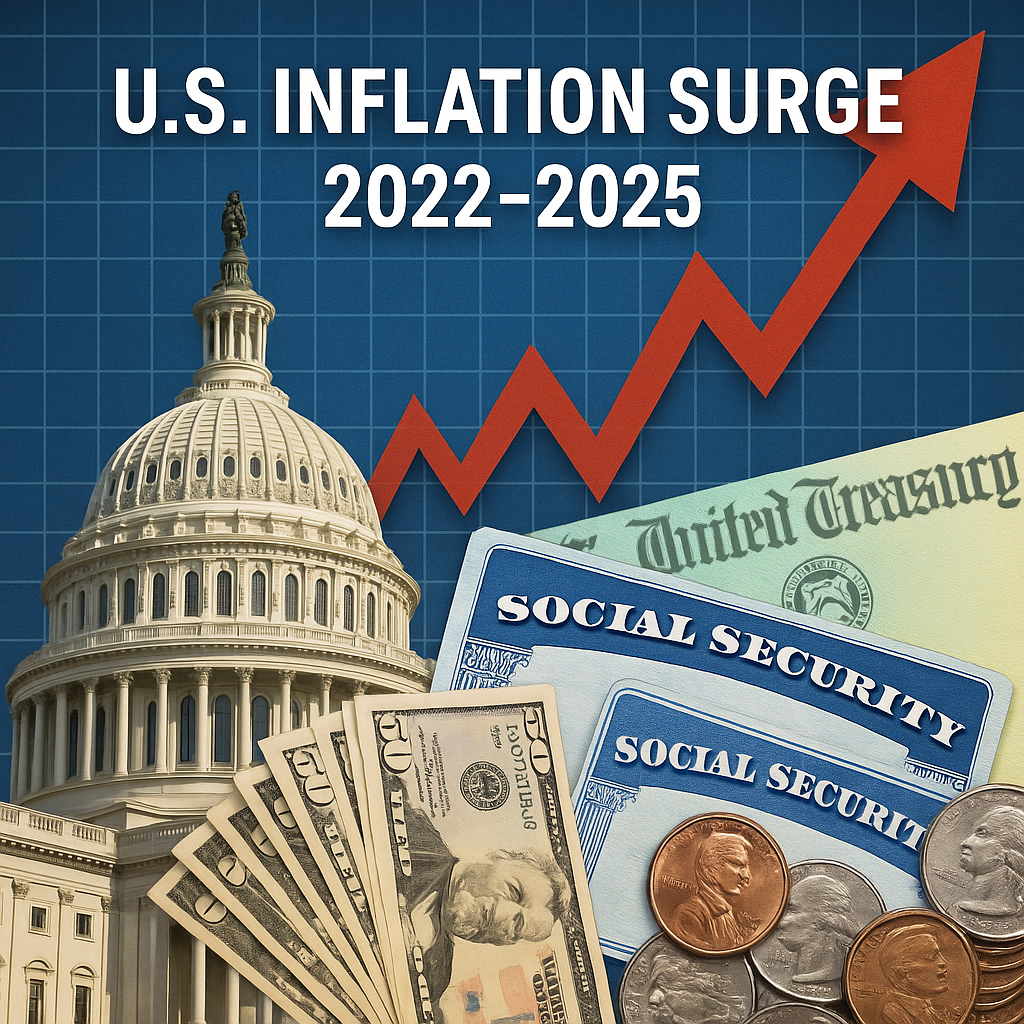
Revised Case Example: U.S. Inflation Surge (2022–2025)
From 2022 through 2025, the United States continued to grapple with elevated inflation, following the initial post-pandemic surge. While some supply chain issues began to ease, persistent factors such as geopolitical tensions, elevated energy costs, and strong consumer demand kept inflation above pre-2020 norms. The Biden administration, along with Congress and federal agencies, faced several complex fiscal challenges:
Rising infrastructure costs under the continued rollout of the Bipartisan Infrastructure Law, with materials and labor becoming more expensive than originally budgeted.
Significant Cost-of-Living Adjustments (COLAs) for Social Security beneficiaries, reflecting the sustained high Consumer Price Index (CPI) levels.
Soaring interest payments on the national debt, as the Federal Reserve raised interest rates to combat inflation, making new borrowing more expensive.
Increased political and public pressure to strengthen social safety nets such as SNAP and Medicaid, as many families struggled to keep pace with higher living costs.
This 2022–2025 period underscored the critical link between inflation and federal budget planning. Policymakers were forced to adapt spending priorities, revise fiscal projections, and implement data-driven strategies to maintain economic stability and deliver essential services.



One thought on “How Inflation Impacts Federal Budget Allocations”