
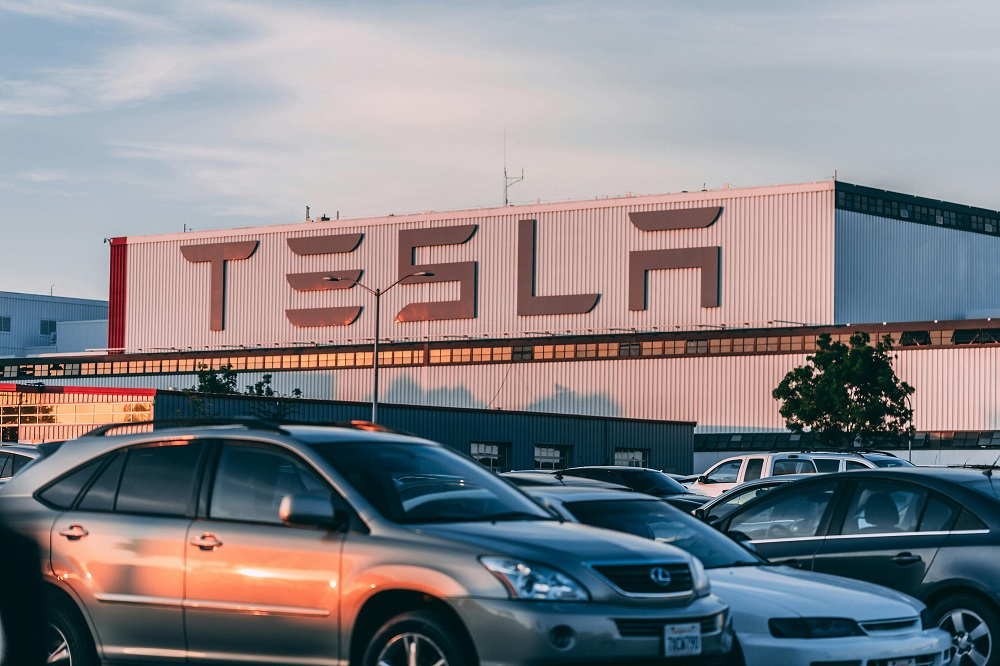
On paper the United States should have been the leader in electric vehicles. The country invented the automobile industry, is home to Tesla (the firm that sparked modern mass EV demand), and has huge capital markets and advanced engineering talent. And yet today the global EV landscape is dominated by China; Europe also outpaces the US on key fronts like charging infrastructure and policy coherence.
That divergence is the result of multiple interacting forces policy choices and timing, industrial strategy (or the lack of one), supply-chain dynamics, market design and consumer patterns, and geopolitics. Below I unpack the main reasons the US slipped relative to China and parts of Europe, with evidence and policy implications.
Timing and scale
The single most decisive factor in China’s lead was scale deliberate, fast, and sustained. Beijing treated Electric Vehicles as a national industrial priority and stacked policies to build a domestic industry from raw materials to finished cars.
Over the last decade China rapidly scaled manufacturers, suppliers, and battery gigafactories, creating enormous domestic capacity. That scale produced cost declines and learning-by-doing that are now hard to match.
Recent industry overviews and market share data show China’s dominance in Electric Vehicles production and battery manufacturing Chinese firms now produce a very large share of the world’s EVs and an even larger share of battery capacity. This concentration of manufacturing and component supply chains naturally lowers costs for domestic players and gives them export advantages. BloombergNEF
A coherent industrial policy vs a stop start approach
China’s approach was strategic and long-term: generous subsidies in early years, strong local content rules, massive investment in battery plants, and coordination between central and provincial governments to support factories, charging infrastructure, and supplier ecosystems. The result: a complete, vertically integrated battery and EV ecosystem.
By contrast, the US followed a much less coherent industrial strategy for Electric Vehicles until recently. Policy incentives were uneven (state-level ZEV programs in places like California existed for years, but federal policy was episodic), and federal support only ramped substantially with the Inflation Reduction Act (IRA) of 2022.
The IRA is a major corrective it directs large incentives at domestic battery and vehicle assembly but it’s partly a catch-up measure rather than the earlier multi decade industrial push seen in China. The IRA also came with complicated sourcing and assembly rules that have had mixed short-term effects on buyer incentives. Electrification Coalition
The battery supply chain
Batteries are the heart of Electric Vehicle economics. China today controls much of the global battery value chain: not just cell manufacturing (companies like CATL, BYD), but refining and processing of key materials (graphite, lithium hydroxide, nickel sulfate), and dominant positions in electrode and precursor production. That vertical control reduces dependency and cost for Chinese OEMs and raises barriers to entry for others.
Benchmarking reports and industry analysts repeatedly highlight how Chinese investment in upstream processing and cell manufacturing created advantages that are still material: lower costs, faster capacity expansion, and supply security.
Those advantages let Chinese carmakers offer lower-priced EVs globally a competitive edge the US simply didn’t secure early on. Benchmark.
Infrastructure
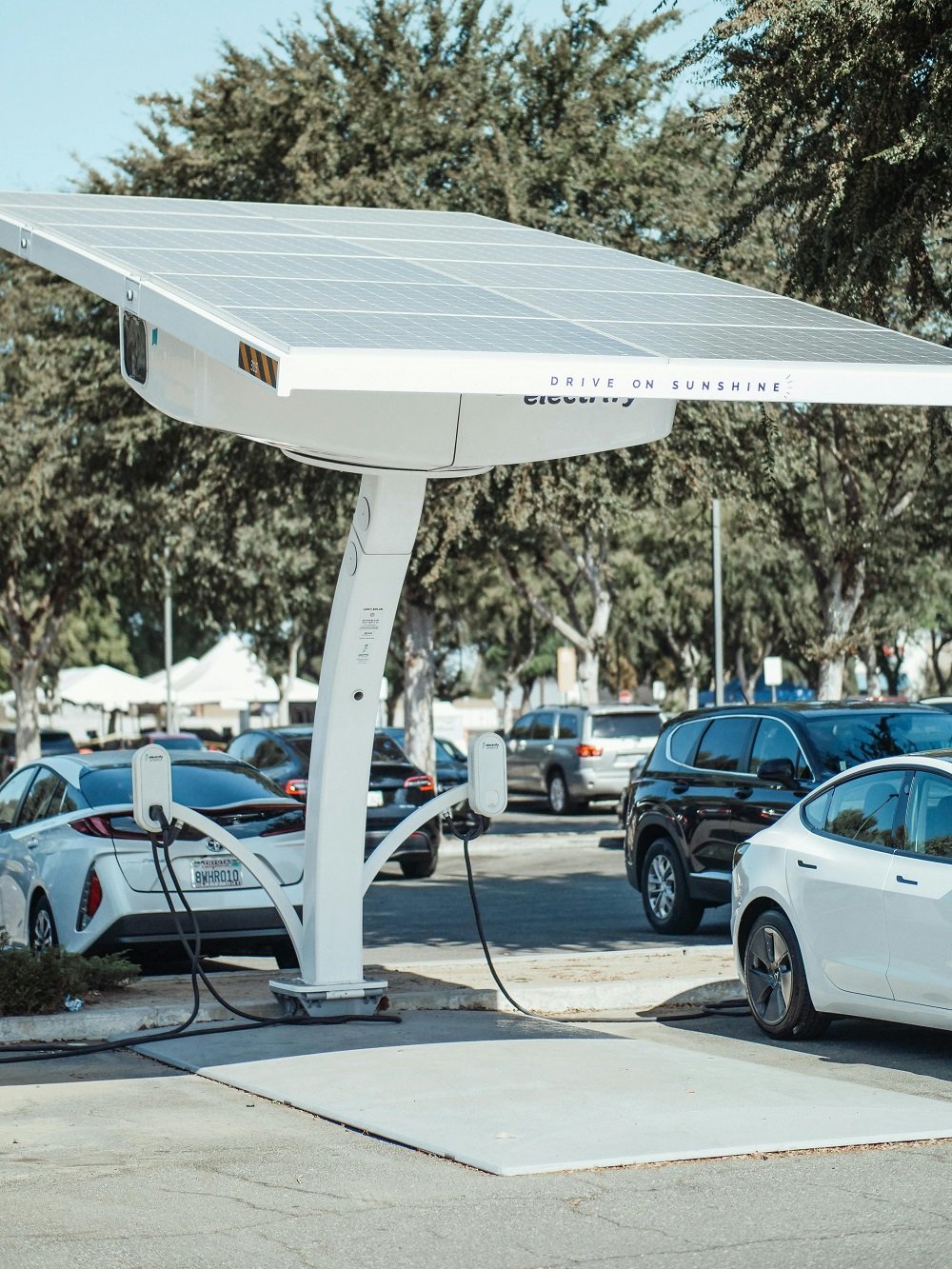
Cars need chargers. China’s public-charging rollout has been rapid and massive; by mid-2024 China had millions of public chargers, far outpacing other regions. Europe has also accelerated charging deployment, driven by urban planning and coordinated EU targets.
The US. in contrast, has lagged on publicly accessible charging density per EV and the network is uneven geographically: more developed in dense urban corridors but sparse in sprawling suburbs and many rural areas.
Charging availability affects how quickly consumers adopt EVs where charging is abundant and cheap, consumers feel comfortable switching; where it’s scarce or unreliable, range anxiety persists.
International charging comparisons show China with a huge installed base and Europe growing faster than the US in charger-per Electric Vehicles metrics. That infrastructure gap is a practical barrier for widespread EV adoption in large parts of the US EVBoosters
Market structure and consumer preferences: size, vehicle types, and price sensitivity
US consumer preferences have historically favored large vehicles SUVs and pickup trucks. For years this made a rapid transition to EVs more expensive and complicated because electrifying larger vehicles requires bigger batteries and different engineering.
While Tesla and a few US automakers focused on premium Electric Vehicles mass-market, affordable electric models especially for domestic pickup and truck segments arrived later.
Meanwhile, Chinese manufacturers focused heavily on affordable small EVs tailored to mass market needs and urban driving patterns.
They flooded markets with lower-priced models that accelerated adoption in numerous countries. In Europe, regulatory pressure and higher fuel costs also pushed consumers toward electrification faster than in much of the US The result faster adoption curves in other regions, particularly China and parts of Europe.
Policy uncertainty and political swings
A persistent reality in the US has been policy churn: incentives and mandates can rise and fall with administrations and legislative battles. While the IRA dramatically boosted federal support in 2022, political contestation and more recent rollbacks or threats to clean-energy programs have created commercial uncertainty.
Producers and investors prefer stable, long-term policy frameworks the kind seen in China and multiple European countries because they underpin multi-billion dollar factory and supply-chain investments.
Recent reporting also highlights how shifts in federal posture on clean energy can have near-term negative impacts on investor confidence and the attractiveness of long-term manufacturing projects in the US This regulatory whiplash contrasts with China’s multi-year, state-driven approach. The Washington Post
Trade geopolitics and export dynamics
China’s emergence as an EV exporter has coincided with trade leverage: by building domestic scale, Chinese firms can export competitively priced vehicles and battery products to Europe and other markets.
That export capacity pressures incumbents elsewhere European automakers must compete with low-cost Chinese models, and US automakers face both domestic competition from Tesla and foreign competition with cheaper imports.
At the same time, geopolitical tensions and tariffs complicate supply chains and market access. Export controls, tariffs, and shifting trade policy can advantage one set of players and hamper others and these dynamics are playing out now as governments reassess reliance on foreign suppliers for key technologies.
Corporate strategy and legacy manufacturers
Legacy US automakers had mixed responses. Ford and GM invested heavily in electrification, but they also carry large legacy combustion-engine supply chains, dealer networks, and internal organizations that complicate rapid pivoting.
By contrast, many Chinese Electric Vehicles makers are newer firms built from the start with EV platforms, lean product cycles, and digital sales models. That organizational flexibility gave new entrants an edge in design iteration, cost control, and speed to market.
Moreover, many European incumbents faced their own hardships but benefited from regulatory pressure and coordinated industrial policies that forced faster transition in some markets.
Investment patterns
Finally, China’s major domestic investments both public and private in battery gigafactories, material processing plants, and supplier networks created predictable investment pipelines. In the US while there has been surging investment since the IRA, much of it is recent and still working its way through permitting, community approvals, and supplier building.
The lag between funding commitments and actual capacity matters. Building a regional battery ecosystem that includes refining and precursor processing takes years and China started earlier. Electrification Coalition
So is the US doomed? Not necessarily but catching up will be hard
Being behind today doesn’t mean permanent failure. The IRA and state level programs (especially in places like California) mean the US now has serious resources aimed at reshoring battery and EV manufacturing.
American strengths leading universities, deep capital markets, an innovative start-up ecosystem, and strong consumer purchasing power are real advantages. But the path back to global leadership is neither automatic nor easy.
Speed of scaling: building domestic processing, electrodes, and cell capacity requires time and predictable policy signals.
Materials processing: the US must grow refining and precursor capacity to reduce reliance on foreign supply.
Charging deployment: closing the public charger gap especially in rural and suburban corridors, is urgent.
Regulatory stability: long-term, consistent policy will be needed so investments aren’t subject to political swings.
Affordable models: mainstream adoption will depend on affordable Electric Vehicles across segments, including pickups and small cars.
What should US policymakers and industry do next?
Accelerate upstream investment
Incentives and public-private partnerships for battery materials refining and processing (not just cell assembly). This reduces vulnerability and gives domestic firms input security.
Streamline permitting and workforce programs
Fast but responsible permitting for factories, plus investments in workforce training, can shorten the timeline from funding to production.
Scale charging infrastructure
Targeted federal and state funding to expand reliable, high-power public chargers especially on long-distance corridors and underserved regions. Coordinated utility planning for grid upgrades is essential. IEA
Stability and predictability
Bipartisan commitments (or long-term frameworks) to avoid policy whiplash that chills investment. The IRA is a big step; its benefits will be best realized with predictable implementation. Electrification Coalition
Support mass-market EVs
Encourage models and business strategies that lower purchase price (incentives, volume production, shared platforms) so EVs aren’t just a premium offering.
Trade and diplomatic engagement
Where necessary, use trade policy to guard against dumping but complement this with diplomatic outreach to secure supply chains without triggering destructive escalation.