
Immigration and census data are two of the most powerful and simultaneously misunderstood forces shaping public policy, politics, and community life. Numbers from migration flows feed debates about labor markets, social services, and national identity.
Census counts determine congressional seats, federal funding formulas, and how communities are represented. But the collection, interpretation, and use of these data are fraught with technical challenges and political controversy.
Big picture trends in migration
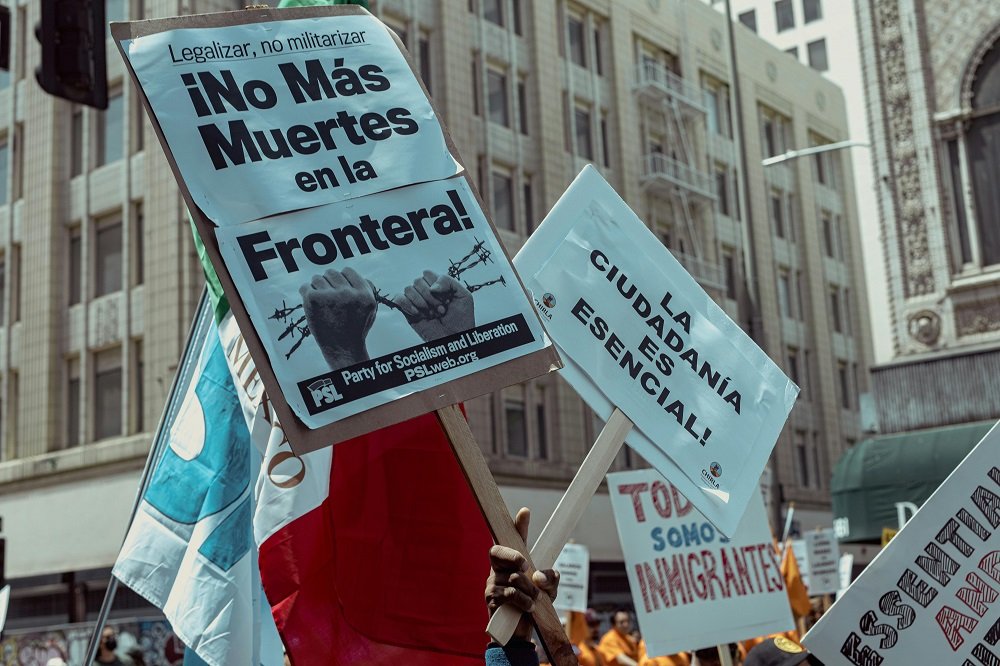
Two broad trends have dominated the last half-decade: continued growth in the global migrant stock and sharp year-to-year swings in net migration for leading destination countries like the United States.
On the global level, international migration continued to grow in the early 2020s. United Nations and migration-data trackers placed the number of international migrants in the hundreds of millions (roughly 275 to 304 million in mid-2020s estimates), reflecting both long-term growth and new displacements from conflict, climate shocks, and economic pressures. These global aggregates matter because they set the context in which national flows seasonal workers, asylum seekers, family reunifications occur. Migration Data Portal+1
In the U.S., migration was the dominant component of population growth in recent years. The US Census Bureau reported that net international migration accounted for the lion’s share of population increase between 2022 and 2024, with big revised estimates showing millions of people arriving in short windows — including a one-year net gain that the bureau described as historically large.
Those revised methods and numbers showed net international migration accounting for more than 80% of population growth in some estimates. At the same time, independent analysts (e.g., Migration Policy Institute, Pew) documented large year to year upticks in the foreign-born population between 2022 and 2024, making the immigrant population one of the fastest-growing components of the U.S. demographic mix. Census.gov+2migrationpolicy.org+2
Why the volatility? A mix of policy, pandemic responses, humanitarian crises, and labor demand. The COVID era temporarily curtailed some flows, while later policy and enforcement changes, temporary arrival mechanisms, and shifting origin-country conditions all produced bursts of arrivals and departures that produced unusually large swings in net migration. Census.gov+1
Why the census matters to immigration debates (and vice versa)
Census numbers aren’t just statistics in a vacuum they shape political power, funding, and services. The US Constitution requires a decennial count to apportion seats in the House of Representatives; federal programs Medicaid, highway funding, Title I education grants, among many others use census or census-based population estimates to allocate money to states and localities. That means errors in who is counted (or how they are counted) have real-world consequences for representation and resources.
Immigration affects those counts directly. Large inflows change local demographic mixes, school enrollment projections, housing demand, and labor markets; they also often concentrate geographically (in metro areas and specific states), shifting political and fiscal needs at local levels. Conversely, how the census counts noncitizens, recent arrivals, and mobile populations affects the accuracy of those resource allocations and redistricting plans. Census.gov+1
The technical shakeups that made the 2020s especially contentious
Two technical changes and one practical reality fueled much of the controversy around census and migration data in the 2020s:
Differential privacy: For the 2020 Census outputs, the Census Bureau introduced differential privacy to protect respondents’ identities by injecting controlled noise into published tabulations.
While the technique strengthens confidentiality, it also alters small-area statistics those most valuable for local planning and redistricting.
Critics argued the noise could distort counts for small towns, indigenous communities, and minority populations in ways that matter for political maps and funding decisions. Proponents said privacy protection was necessary given modern data-matching risks. That tradeoff privacy vs. precision remains a live technical and political debate. The Center for Renewing America+1
Improved migration estimation methods: Census methodological updates in 2023–2024 led to noticeably different estimates of net international migration, with later revisions showing higher inflows than earlier estimates suggested.
In December 2024 the Census Bureau highlighted methodological improvements that raised the net migration figures for recent years and underscored how much the story about population change depends on measurement choices. These revisions aren’t errors so much as better models and data inputs but they produce headline-grabbing changes that shape policy perceptions. Census.gov+1
Operational realities of counting mobile and vulnerable populations: The decennial count struggles most with groups who are mobile, live in unconventional housing, or fear contact with government categories that often overlap with immigrant, low-income, and racial-minority communities.
Post-2020 analyses showed statistically significant undercounts among Hispanic and Black populations in the 2020 Census that were larger than in 2010 for some groups a fact that raises real concerns about representation and program targeting. Those undercounts also interact with the privacy noise: small-area distortions and nonresponse can compound each other. Census.gov+1
Flashpoints and controversies
Here are the central disputes framed in plain terms.
Differential privacy vs data accuracy
Supporters: The privacy risk in a world of commercial data brokers and easy reidentification is real; protecting individual respondents preserves trust and is legally and ethically necessary.
Critics: Injecting noise into low-population geographies can make the data less useful for redistricting, tribal governance, school planning, and nonprofit service targeting sometimes skewing results in politically meaningful ways. The concern is especially acute for small racial and ethnic groups or sparsely populated counties where a small numerical shift can change outcomes. The Center for Renewing America+1
Undercounts and civil-rights implications
Underrepresentation matters. Historically, the census has undercounted Black, Hispanic, and hard-to-reach populations. In 2020, the Hispanic or Latino population exhibited a statistically significant undercount that alarmed civil-rights advocates because undercounts reduce political clout and lower funding to communities that most need federal support. This isn’t theoretical: evidence shows the undercount rates were larger for some groups in 2020 than in 2010, provoking lawsuits and calls for remedial action. Census.gov+1
Counting noncitizens and the scope of residence
Debates flare about who should be considered a resident for apportionment and resource allocation. Some argue undocumented immigrants and even short-term arrivals should be excluded from apportionment counts; others argue that the constitutional directive and practical fairness require counting everyone who resides in a place, regardless of legal status. Technically, the census counts “usual residents,” but operationalizing that rule in a politically polarized environment creates disputes and legal battles. Census
Political weaponization and trust
Census data and immigration statistics get weaponized: politicians selectively emphasize numbers that support their policy aims (e.g., “record migration” or “rising deportations”), while opponents highlight methodological flaws to discredit unfavorable outcomes.
This politicization reduces public trust just when participation matters most, and it complicates the bureau’s job of communicating technical tradeoffs clearly. Recent enforcement actions and policy shifts have also heightened fears among immigrant communities about engaging with government counts and surveys. AP News+1
Real world consequences
When counts are off, consequences cascade:
Redistricting: Small errors can alter who wins a seat in a tight district. Because differential privacy and undercounts disproportionately affect small populations and neighborhoods, redistricting maps — and therefore political representation can feel the impact.
Federal funding: Many spending formulas rely on population counts; undercounts reduce funding for schools, health clinics, and transportation that serve growing immigrant populations.
Program planning: Local governments and nonprofits rely on census and ACS (American Community Survey) data to plan everything from multilingual outreach to housing needs; noisy or biased data hinders good service delivery.
Public perception and policy: Headlines about “record migration” or “big declines” shape public sentiment and policy choices, even when those headlines depend on new methods or short-term fluxes rather than long-term trends. Census.gov+1
What the data does show, cautiously
If we synthesize the best available sources without overclaiming, here are some cautious takeaways:
Global migration is historically large and growing; the world hosted roughly 300+ million international migrants in the early-to-mid-2020s. Migration Data Portal+1
For the US recent years saw unusually high net international migration that drove much of population growth; methodological updates in late-2024 revised upward prior estimates. These sudden swings make short-term headlines but don’t necessarily predict long-term trajectories. Census.gov+1
The 2020 Census experienced measurable undercounts for some racial and ethnic groups, and the introduction of differential privacy added a new technical controversy about small-area accuracy vs. privacy protection. Census.gov+1
How to read and use these data responsibly (five practical rules)
Ask: what’s the geographic scale? Data are more reliable at national and state levels than at the block or small-town level, where noise and undercounts have a bigger relative effect. Use larger aggregates for headline claims.
Check the methods: When a number changes dramatically, look for methodological notes. A revision often reflects better data, not a sudden migration tsunami. The Census Bureau’s methodological blog and technical memos are helpful. Census.gov
Mind the timeframe: Short windows can capture ephemeral spikes (policy-driven arrivals, temporary programs). Distinguish cyclical and structural changes before making sweeping policy prescriptions.
Beware of cherry-picking: Political actors often highlight the most sensational number without context. Cross-reference independent researchers (Pew, Migration Policy Institute, UN/IOM) with official sources. Pew Research Center+2migrationpolicy.org+2
Center lived experience: Quantitative data must be interpreted alongside qualitative insights from local service providers, community organizations, and immigrant advocates who see how numbers translate into needs on the ground.
Policy implications and constructive next steps
Given the practical importance of accurate migration and census data, here are evidence-grounded steps that policymakers and civic leaders can take:
Invest in outreach and trust-building for hard-to-count communities. Fear of enforcement or lack of language access suppresses participation; targeted local partnerships can close gaps.
Improve transparency around privacy methods. The Census Bureau should continue to document and explain differential privacy parameters and provide user-friendly guidance on where the noise matters most so redistricting officials and planners can adjust appropriately. The Center for Renewing America
Support methodological research and disclosure. Independent researchers should have access to synthetic and validated microdata (with privacy protections) so they can assess bias and propose corrections.
Use multiple data sources for decision making. Administrative records, ACS microdata, school enrollment, and local surveys can triangulate population trends and mitigate single-source errors.
Depoliticize core methods where possible. Where technical choices (like privacy parameters) can be insulated from short-term political pressure, the resulting stability will improve public confidence.